
Der Sommer, in dem Ihr Körper mehr von Ihnen verlangt
Längere Tage ziehen Sie nach draußen. Mehr Wanderungen, mehr Reisen, mehr Zeit auf den Beinen, vielleicht ein Trainingsblock, den Sie schon lange beginnen wollten. Und etwa ab der dritten Woche bemerken viele aktive Erwachsene über 40 dasselbe: Die Kraft ist da, aber die Erholung hält nicht ganz mit. Der zweite Gipfel fühlt sich schwerer an als der erste.
Diese Lücke zwischen dem, was Sie tun möchten, und wie schnell sich Ihr Körper erholt, ist größtenteils eine mitochondriale Geschichte. Mitochondrien sind die winzigen Motoren in Ihren Muskelzellen, die Nahrung und Sauerstoff in verwertbare Energie umwandeln. Mit zunehmendem Alter sammeln sich abgenutzte Mitochondrien schneller an, als unsere Zellen sie abbauen können, und die Muskeleffizienz nimmt schleichend ab.
Genau für diesen Prozess wurde Urolithin A untersucht. Und im Gegensatz zu vielen Langlebigkeits-Inhaltsstoffen stammen die interessanten Beweise hier von Menschen, nicht nur von Mäusen.
Was Urolithin A tatsächlich ist
Urolithin A ist nichts, was Sie direkt essen. Es ist eine Verbindung, die Ihre Darmbakterien aus Ellagitanninen herstellen, den Polyphenolen, die in Granatäpfeln, Walnüssen und einigen Beeren vorkommen. Der Haken: Nur einige Menschen tragen die Darmbakterien, um nennenswerte Mengen davon zu produzieren, weshalb die Supplementierung der fertigen Verbindung der zuverlässige Weg geworden ist.
Sein Hauptmechanismus ist die Mitophagie – der zelluläre Reinigungsprozess, der beschädigte Mitochondrien identifiziert und recycelt, damit gesündere die Aufgabe übernehmen können. Bessere Reinigung, effizientere Muskelzellen. Das ist die Theorie. Hier ist, was die Studien herausgefunden haben.
Was die Humanstudien zeigen
Drei Humanstudien untermauern die Geschichte von Muskeln und Ausdauer, und es lohnt sich, jede einzelne davon präzise zu betrachten.
1. Erwachsene mittleren Alters: ~12 % Muskelkraftzuwachs
Eine randomisierte, doppelblinde, placebokontrollierte Studie verabreichte Erwachsenen mittleren Alters vier Monate lang täglich 500–1000 mg Urolithin A (NCT03464500). Das Ergebnis: eine signifikante ~12%ige Verbesserung der Muskelkraft, zusammen mit klinisch bedeutsamen Zuwächsen bei der aeroben Ausdauer (Spitzen-VO₂) und der Gehleistung in sechs Minuten. Auch die Blutwerte bewegten sich in die richtige Richtung – niedrigere Plasma-Acylcarnitine (ein Zeichen für einen effizienteren Fettstoffwechsel) und niedrigeres CRP (weniger Entzündungen) [1].
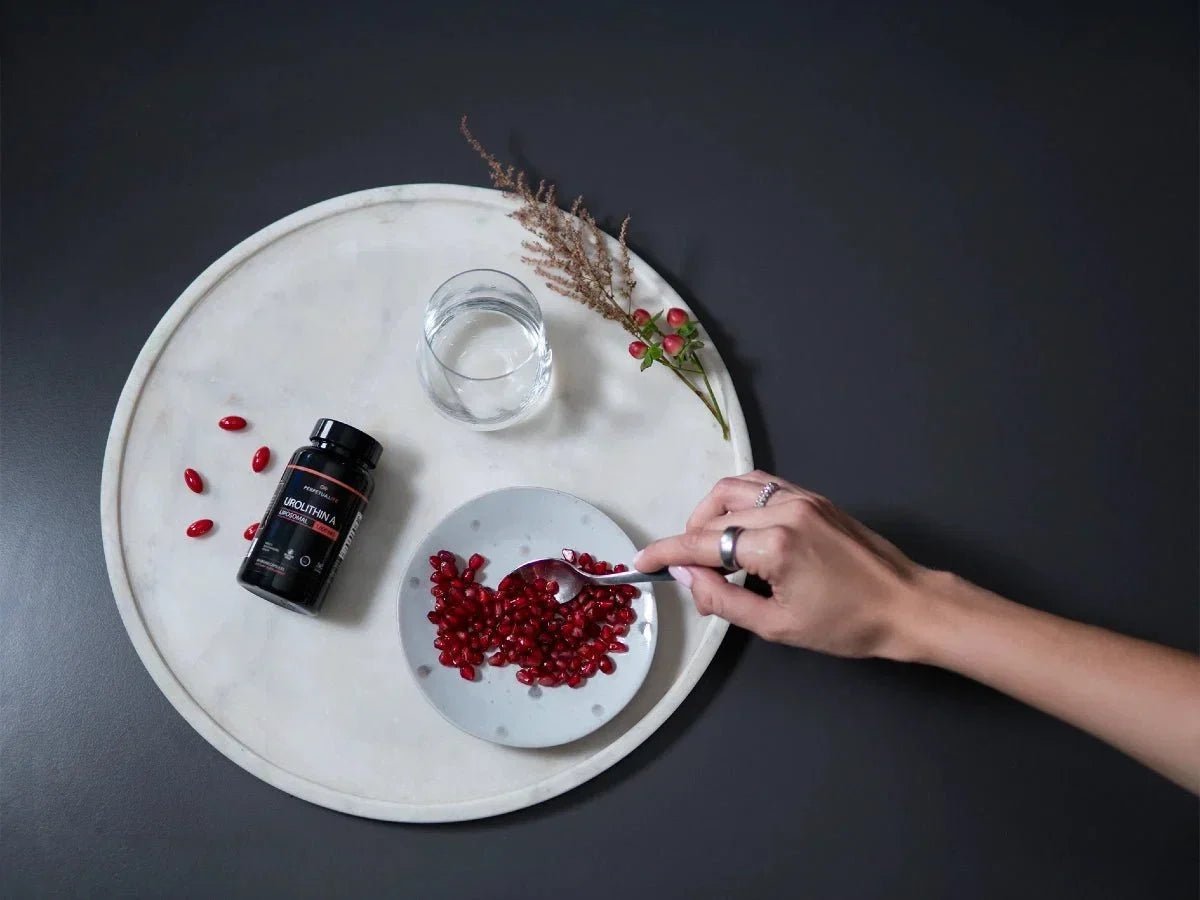
Urolithin A Liposomal – dieselbe aktiv untersuchte Verbindung, geliefert in einem liposomalen Format, das darauf ausgelegt ist, die Aufnahme eines Polyphenols zu verbessern, das der Körper von selbst nur schwer aufnehmen kann.
2. Erwachsene im Alter von 65–90 Jahren: bessere Muskelausdauer
Eine zweite RCT (n=66) umfasste ältere Erwachsene im Alter von 65 bis 90 Jahren und verabreichte ihnen vier Monate lang 1000 mg/Tag (NCT03283462). Hier verbesserte Urolithin A signifikant die Muskelausdauer – gemessen als Anzahl der Muskelkontraktionen bis zur Ermüdung sowohl in Bein- als auch in Handmuskeln – und senkte erneut Acylcarnitine, Ceramide und CRP [2].
Ein ehrlicher Hinweis, weil er wichtig ist: In dieser Studie erreichten die primären Endpunkte der Gehstrecke in sechs Minuten und des Handmuskel-ATP keine statistische Signifikanz. Urolithin A ist kein magischer Schalter für jede Leistungsmetrik. Die Ausdauer- und zelluläre Effizienzsignale waren real; die Endpunkte der Ganzkörperfunktion waren gemischt.
3. Eine systematische Überprüfung: Das Muster hält an
Eine systematische Überprüfung aus dem Jahr 2024 fasste fünf Studien zusammen, die 250 gesunde Erwachsene, Dosen von 10 bis 1000 mg/Tag über 28 Tage bis vier Monate umfassten. Ihr Fazit: Urolithin A war gut verträglich, zeigte dosisabhängige entzündungshemmende Effekte, regulierte Gene hoch, die mit der mitochondrialen Funktion und der Fettsäureoxidation in Verbindung stehen, und erhöhte Muskelkraft und Ausdauer. Es wurde auch kein Effekt auf die Körperzusammensetzung oder die allgemeine körperliche Funktion festgestellt – wiederum eine nützliche Begrenzung der Behauptung [3].
Urolithin A Liposomal – am besten zu verstehen als mitochondriale und muskuläre Unterstützung für aktives Altern, kein Stimulans und keine sofortige Energielösung.
Wie man es diesen Sommer tatsächlich anwendet
Ein paar praktische Hinweise, basierend auf der Durchführung der Studien:
- Denken Sie in Monaten, nicht in Tagen. Jede positive Studie lief vier Monate lang mit einer konstanten Tagesdosis. Dies ist ein Basissupplement, kein Pre-Workout.
- Kombinieren Sie es mit Arbeit. Urolithin A unterstützt die Maschinerie; die Zuwächse an Kraft und Ausdauer in diesen Studien traten bei Menschen auf, die sich weiterhin bewegten. Es ergänzt Training und Aktivität, ersetzt sie aber nicht.
- Setzen Sie ehrliche Erwartungen. Kraft, Ausdauer und Entzündungsmarker verbesserten sich. Spitzenleistung, Gehstrecke und einige ATP-Messungen waren inkonsistent. Das ist ein wirklich gutes, aber begrenztes Ergebnis – und Klarheit darüber hilft, Enttäuschungen zu vermeiden.
Wo es in eine Zellenergie-Routine passt
Wenn es bei Urolithin A um die Qualität Ihrer Mitochondrien geht, ist die andere Hälfte der Energiegleichung der Brennstoff, mit dem sie betrieben werden. NAD+ ist ein Coenzym, das für die Energieproduktion der Zellen von zentraler Bedeutung ist und dessen Spiegel mit dem Alter abnimmt. Da unser NAD+-Booster-Kit derzeit nicht vorrätig ist, ist der derzeit verfügbare Weg zu diesem Pfad Nicotinamid-Ribosid, ein NAD+-Vorläufer.
Liposomales Nicotinamid-Ribosid – eine ergänzende zelluläre Energieunterstützung, die den NAD+-Signalweg anstelle der Mitophagie anspricht, für Leser, die eine umfassendere mitochondriale Routine aufbauen.
Nichts davon ist für uns abstrakt. Urolithin A ist mit Abstand unser meistgekauftes Produkt, und die mitochondriale Gesundheit hat sich zu einem der am schnellsten wachsenden Themen in der Langlebigkeits-Ernährung entwickelt, das von Branchenanalysten inzwischen als grundlegende Säule der Gesundheitsspanne und als Kategorie mit einem Wachstum von mehr als 15 % pro Jahr beschrieben wird [extern: Nutraceutical Business Review, 2026-07-08]. Wissenschaft und Nachfrage zeigen in die gleiche Richtung.
Die ehrliche Zusammenfassung
Urolithin A verfügt über etwas, das die meisten Langlebigkeits-Inhaltsstoffe nicht haben: replizierte randomisierte Humanstudien, die zeigen, dass es die Muskelkraft und -ausdauer unterstützt, plus konsistente Anzeichen für geringere Entzündungen und effizientere Mitochondrien. Es hat auch klare Grenzen – mehrere Ganzkörper-Leistungs-Endpunkte bewegten sich nicht – und es wirkt über einen Zeitraum von Monaten bei Menschen, die sich weiterbewegen.
Wenn Sie diesen Sommer mehr von Ihrem Körper verlangen und einen Langlebigkeits-Inhaltsstoff mit tatsächlichen menschlichen Beweisen wünschen, ist dies einer der wenigen, der es auf die engere Wahl schafft.
Bereit, es zu probieren? Urolithin A Liposomal →
Referenzen
[1] Singh A, et al. Urolithin A improves muscle strength, exercise performance, and biomarkers of mitochondrial health in a randomized trial in middle-aged adults. Cell Reports Medicine, 2022. PMID 35584623. DOI 10.1016/j.xcrm.2022.100633
[2] Liu SZ, et al. Effect of urolithin A supplementation on muscle endurance and mitochondrial health in older adults. JAMA Network Open, 2022. PMID 35050355. DOI 10.1001/jamanetworkopen.2021.44279
[3] Kuerec AH, et al. Targeting aging with urolithin A in humans: A systematic review. Ageing Research Reviews, 2024.
Externer Kontext: „Mitochondrial health emerges as foundational pillar of healthspan nutrition“, Nutraceutical Business Review, 2026-07-08.
Aktie:
Der Sommer ruiniert Ihren Schlaf? Der Calm Stack, der hilft